Valve introduced Trade Protection for Counter-Strike 2 items on July 16, 2025, and it changed how CS2 skin trading works across Steam. The update was made to help CS2 players recover items after account theft or fraudulent trades, but it also added new friction for traders, skin sellers, and marketplaces. For anyone who trades regularly, the stakes are simple: better account security, slower item movement and less supply of skins across the market.
If you trade often or use instant sell services, or move items between platforms, this update matters. It changes how long newly received items stay locked, what can be done with them, and how much risk exists in fast deals. At our skin trading platform, we keep following these changes closely so traders can keep using the platform smoothly.
What is Trade Protection In CS2 Skin Trading?
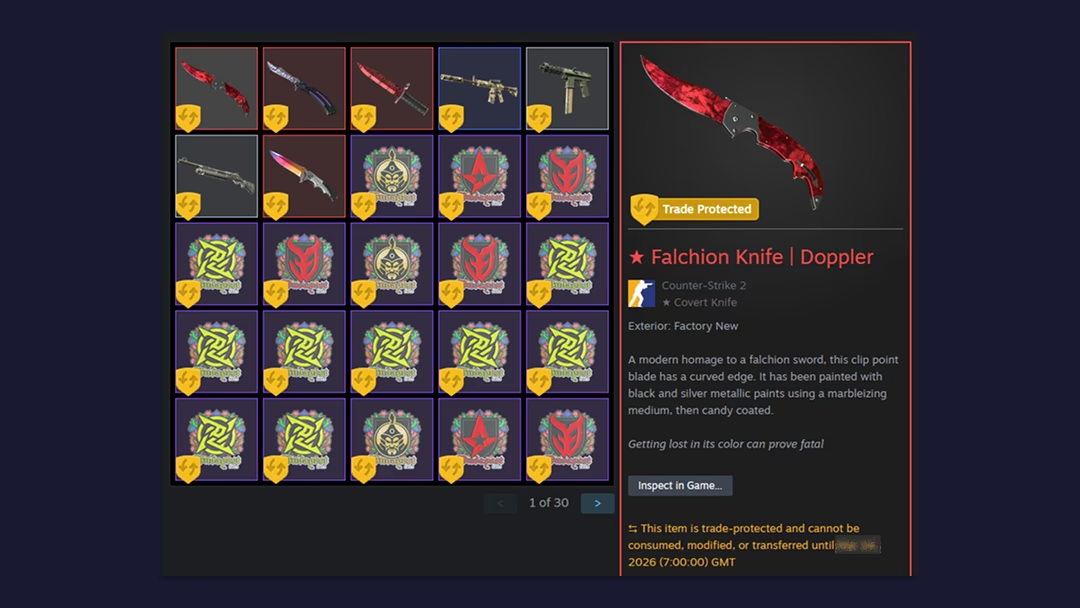
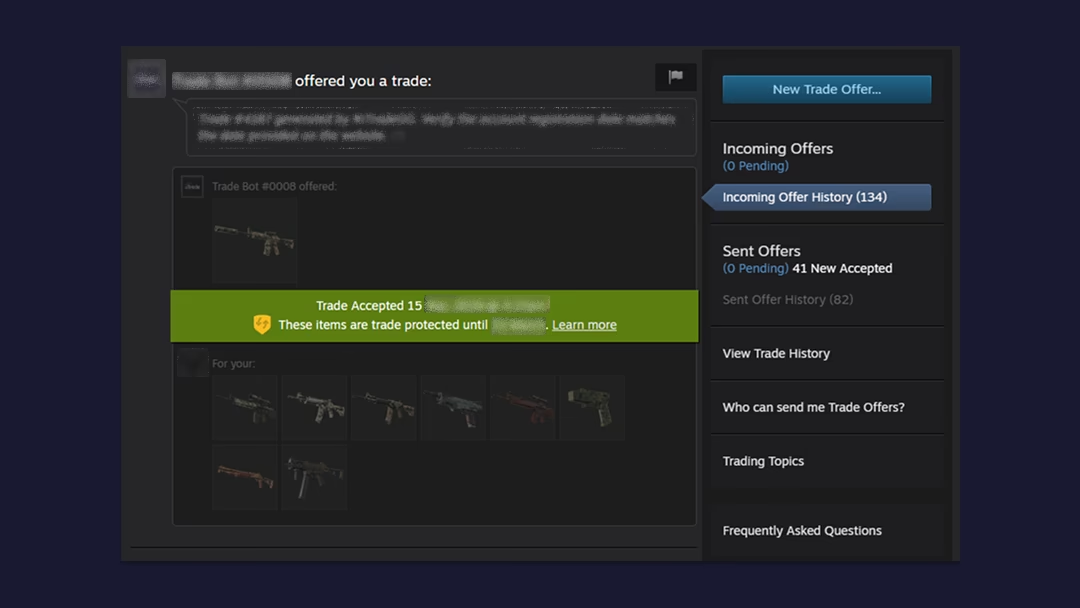
Steam Trade Protection is a security feature for CS2 items. When a trade involving protected items is completed, the skins are delivered right away and can still be equipped and used in game. However, for the next 7 days, those items are marked as Trade Protected.
During that 7 day period, the received items from the trade cannot be transferred, consumed, modified, or moved into storage unit. In simple terms, you can play with them, but you cannot freely move or change them yet.
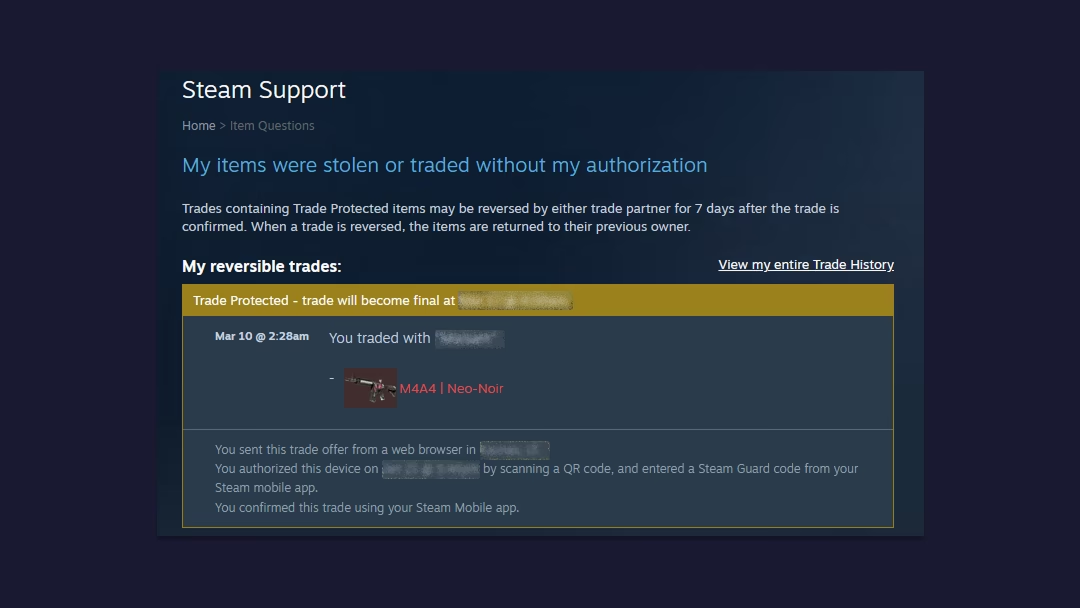
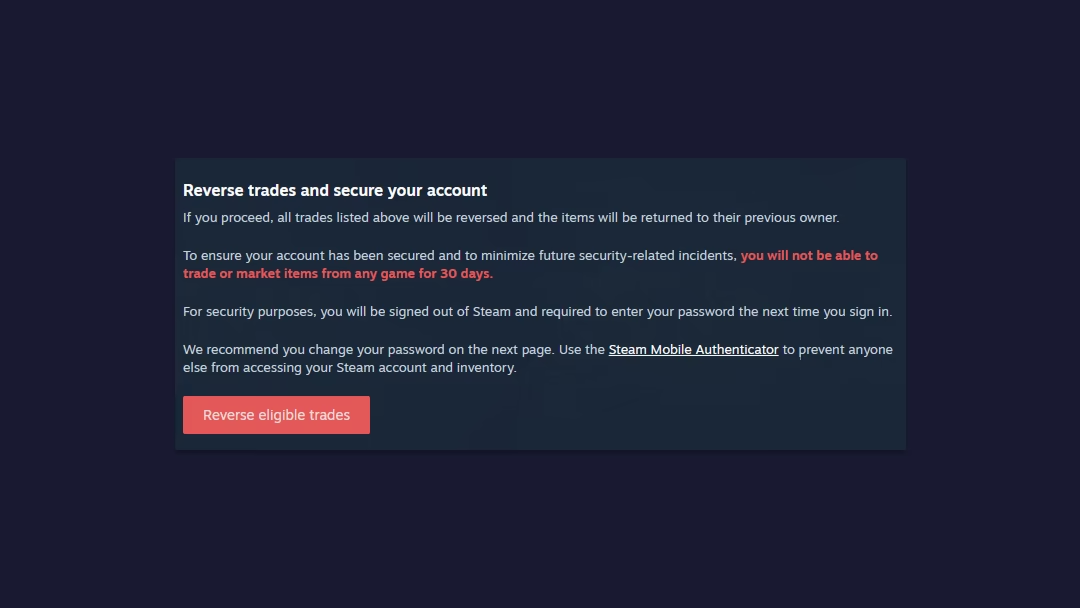
If an account is compromised, the user can go to Steam Trade History and reverse all the recent trades that was made in last 7 days. This gives players a recovery window if skins were moved after phishing, malware, or account theft.
There is an important catch. Steam does not reverse just one single protected item in isolation. If the user starts a reversal, all eligible trades involving Trade Protected items inside that protection window are rolled back. After initiating a trade reversing process, the account receives a 30 day trading and Steam Community Market restriction.
This system is meant to stop stolen items from being moved quickly through the market. It protects players better, but it also means traders must wait longer before newly received items become fully tradeable again.
Cons and Pros Table of Trade Protection Update
How Trade Protection Secures Your Items After an Account Compromise
Trade Protection helps prevent losses from phishing, malware, and stolen accounts. Before this system, attackers could get into an account, quickly transfer valuable skins, and disappear before the victim had time to react.
Now, the new seven day item lock changes that pattern. If stolen CS2 items are moved, they remain protected for 7 days and cannot be quickly pushed deeper through the trading ecosystem. This gives Valve and the account owner more time to spot suspicious activity and reverse trades before the skins are fully gone.
That makes item theft much harder. It also lowers the motivation for scammers who rely on speed. If stolen items cannot be moved or cleaned up quickly, the chance of a successful theft drops. For normal players, this is the clearest benefit of the whole update.
How does this affect the CS2 skin market?
-
The biggest impact is slower movement across the market. Fast traders and volume based skin sellers can no longer treat every received item as instantly liquid. Newly received CS2 items now need time before they can move again, which naturally reduces short term liquidity.
-
This is especially noticeable on P2P marketplaces. After completing a sale, users no longer receive instantly usable balance. Because the trade can still be reversed during Steam’s 7 day Trade Protection window, the balance is kept in pending state until the trade is fully settled. That means a user who sells one skin in order to buy another may now need to wait about a week before the sale becomes usable for the next purchase.
-
For regular users, this changes the entire sell and rebuy flow. What used to feel like one continuous action now becomes a delayed process: sell first, wait for settlement, then buy again. By comparison, bot trading platforms like our instant CS2 skin trading platform can still offer an instant swap style experience, because users are credited immediately after the on platform trade is completed and move straight into a new trade.
-
This also affects case opening and item customization. If a case or item is still under protection, it cannot be consumed or modified. That means case opening, sticker application, sticker scraping, and similar actions are delayed until the protection period ends.
-
Storage behavior changes too. Protected items cannot simply be shuffled around into storage unit right away. That creates extra friction for users who like to organize inventory, move items between holding setups, or prepare skins for later trading in bulk.
-
Cross game item trading also becomes more limited. Protected CS2 items cannot be freely mixed with items from games that do not support the same protection flow. For traders who used mixed item deals across multiple game economies, that is a real workflow change.
-
For marketplaces and trading platforms, the update creates a mixed picture. On one side, it makes stolen items harder to move and improves user safety. On the other side, it adds delays to instant trading, payout timing, and item routing. P2P platforms are affected the most because they may need to treat recent trades as not fully settled until the Trade Protection period ends. That means users can complete a sale but still be left with pending balance instead of balance they can use right away.
So the market gets safer, but less flexible. That is good news for account security, but less ideal for skin traders who depends on speed.
A Critique of Valve’s New Item Protection Feature
The controversy comes from how reversals interact with deals outside Steam. Trades can now be reversed for up to 7 days, which may help in account theft cases, but this also creates problems for deals involving external cash payments. In those situations, a buyer could potentially have the skin trade reversed on Steam while the separate money transaction stays unchanged. That is why some players believe this system could create a new type of dispute or scam in direct cash deals.
The same issue also changes how P2P marketplaces handle settlement. Since a recent item trade may still be reversible, platforms have less reason to treat that trade as final immediately. For normal users, this means selling one skin in order to buy another is no longer always a fast one step process. On many P2P platforms, the sale can turn into pending balance that stays unusable until the Trade Protection period expires. That friction naturally favors bot trading platforms, where the exchange path is simpler and users can move into a new trade immediately after being credited.
There is also a broader usability issue. The feature helps victims, but it adds friction to normal trading behavior. Traders who are not hacked still deal with the same waiting period, the same item limits, and the same reduced flexibility. In that sense, Valve solved one problem by making the everyday trading experience slower for everyone.
Still, it would be unfair to call the update purely negative. It does address a real weakness in Steam item security. The problem is that the protection comes with tradeoffs that affect marketplaces, private deals, and active traders much more than casual users.
Frequently asked questions about Trade protection:
Can I use a Trade Protected item in game right away?
Yes. You can equip and use the item in game as soon as the trade is completed. The restriction mainly affects transferring, consuming, modifying, and storing the item in the storage unit during the protection period.
How long does Steam Trade Protection last?
The protection lasts for 7 days after the trade is completed. Once that period ends, the item is no longer Trade Protected and the trade can no longer be reversed through trade protection feature.
Is selling on a P2P marketplace slower after Trade Protection?
Yes. Because CS2 trades can still be reversed during the 7 day Trade Protection window, many P2P marketplaces keep the seller’s balance in pending status until the trade is fully settled. That means users who sell one skin in order to buy another may need to wait at least a week before the balance becomes usable.
This creates extra friction for players who want to Trade CS2 Skins quickly and move straight from one item into another. By contrast, bot trading platforms like iTrade.gg, tradeit, skinsmoney are not slowed down in the same way. Since the trade happens directly with the platform’s bots and users are credited instantly after trading in their skins, they can immediately withdraw the skins they want without any extra delay caused by Trade Protection.
Can I apply stickers or open cases during the protection period?
No. Protected items cannot be consumed or modified during the 7 day window. That means actions like opening cases or applying and scraping stickers must wait until protection expires.
Does this make CS2 skin trading safer?
Yes, in terms of account theft and stolen item recovery, it is a real security improvement. But it also makes fast trading, instant liquidity, and external cash deals more complicated.
Conclusion
Steam Trade Protection is a meaningful security upgrade for CS2 players. It gives users a better chance to recover stolen items, slows down scammers, and makes account compromise less damaging than before.
At the same time, it creates friction for fast trading, instant selling, item movement, and external marketplaces. That friction is especially visible on P2P marketplaces, where users may sell a skin but still receive only pending balance until the Trade Protection period ends. In practice, that means many users can no longer sell one skin and immediately buy another. The update is therefore both a real security improvement and a real workflow disruption.
The most balanced view is simple: trading is now safer, but less fluid. For regular players, that is often a fair trade. For serious traders and marketplaces, it means adjusting to a new reality.
Even with these changes, the CS2 trading ecosystem is still active and evolving. Platforms like our are still operating, still adapting, and still offering a smoother exchange flow where users can be credited instantly after the trade and move straight into a new skin.
More information regarding trade protection feature can be found in official steam support page: https://help.steampowered.com/en/faqs/view/365F-4BEE-2AE2-7BDD
 Olivier Tremblay
Olivier Tremblay
An experienced analyst of CS2 skins and item trading, with over a decade of involvement in the Counter-Strike 2 (formerly CSGO) community. He creates informative guides on CS2 items, sticker crafts, item trading, and all news related to Steam, assisting regular players in selecting visually appealing cosmetics, trading items more effectively, and staying informed about updates on the Steam platform. He monitors skin collections, market trends, and community news to provide you with valuable content.